Maria Popova
MAria Popova, The Marginalian
“Language is the chalice we lift to our lips to taste our own experience — a vessel that constrains what it contains by giving it its own shape. The more complex our experience, the more muddled the emotions that comprise it, the more it spills outside what language can hold. And yet we live in language —” MP
Here are 10 of Maria’s favorite untranslatable words from around the world,
that have no equivalent in ours, the English language.
ABHIMAN
SanskritThe literal meaning of abhi-man is “self-pride.” Abhiman evokes the pain and anger caused when someone we love, or expect kind treatment from, hurts us. Sorrow and shock are at its root, but it quickly flourishes into a fierce, bruised pride. To recognize abhiman as an inevitable part of our emotional life is to know that breaking the unspoken contracts of love and respect between families and allies is an extremely serious betrayal.
ACEDIA
GreekA distracting, creeping feeling. Like the tickle of a gnat crawling up your arm. A short-lived but disastrous emotional crisis, usually striking between 11AM and 4PM. Its first signs are listlessness and irritability, but it doesn’t take long to turn into desolation and despair.
AMAE
JapaneseThe sensation of temporary surrender in perfect safety when you crumple into the arms of a loved one to be coddled and comforted. In Japan, amae is commonly acknowledged as part of all kinds of relationships, felt not only between family members, but with friends and in the workplace too. According to the Japanese psychologist Takeo Doi, amae is “an emotion that takes the other person’s love for granted,” there when we depend on another’s help with no obligation to be grateful in return. You can even be encouraged to show amae to yourself. For Doi, surrendering to amae is important because it represents a return to the indulgences and unconditional nurturing of infancy. It’s the glue which allows stable relationships to flourish, an emblem of the deepest trust… this combination of vulnerability and belonging.
BASOREXIA
20th-century English derivative of Latin and GreekThe sudden urge to kiss someone.
GRENG JAI
ThaiThe feeling of being reluctant to accept another’s offer to help because of the bother it would cause them.
KAUKOKAIPUU
FinnishFeeling homesick for a place you’ve never been to. From kauko — faraway, and kaipuu — a yearning.
MALU
IndonesianThe sudden experience of feeling constricted, inferior and awkward around people of higher status.
SAUDADE
PortugueseA melancholic yearning for someone, or something, which is far away or lost. It’s always there, pulsing between the surface with its hopefulness tinged with grief. There is a vague yearning, yet it is interlaid with resignation and the pleasure of remembering past joys.
VIRAHA
SanskritViraha is usually translated as longing or the particular kind of love felt during separation or abandonment. An aspect of sringara rasa (erotic and romantic love), one of the nine rasas or themes that shape human experience, viraha is a feeling of incompleteness without a loved one, and a fixation on the ecstasy of the longed-for reunion. Viraha recalls the formulations of romantic infatuation, not only the erotic — the poetry of the Occitan troubadours, or the inconsolable longing expressed in Portuguese fado music. The difference is that viraha is also a religious feeling — the soul’s quest to find it’s spiritual home. [See John Donne’s “Batter My Heart”.]
ŻAL
PolishŻal (pronounced jal) is melancholy felt at an irretrievable loss. This is not straightforward dejection. Żal is fickle, and shifts its shape, one moment resigned, the next rebellious. It combines the disappointment, regret and even violent fury which comes when some part of our lives has been taken away for good. It is most of all a kind of anger at recognizing the end of things.
A Series of Perspectives on Aging (Worthy-Repost)
Source: Maria Popova, The Marginalian
photo source: Anon
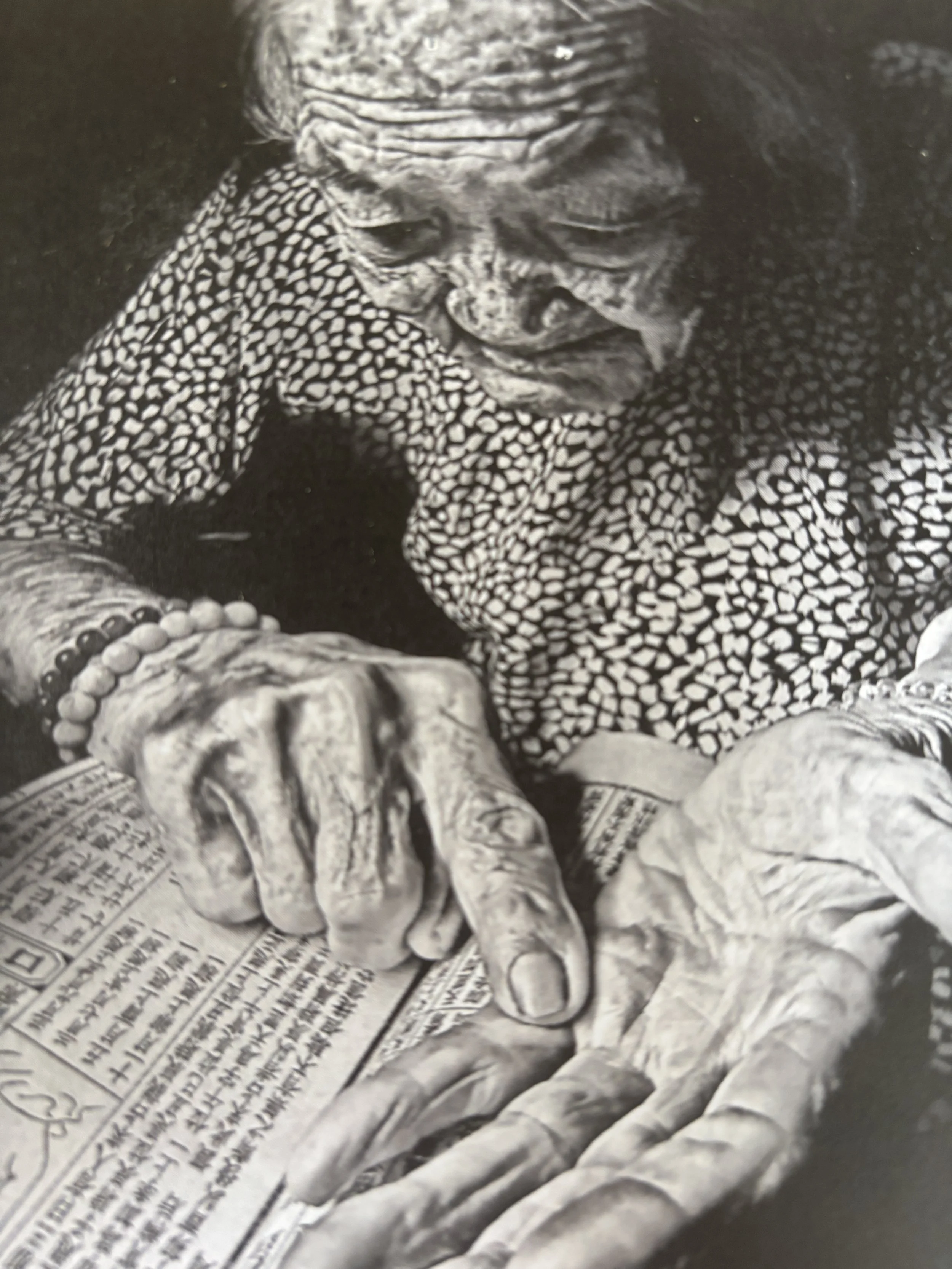
Ursula K Leguin, American Author
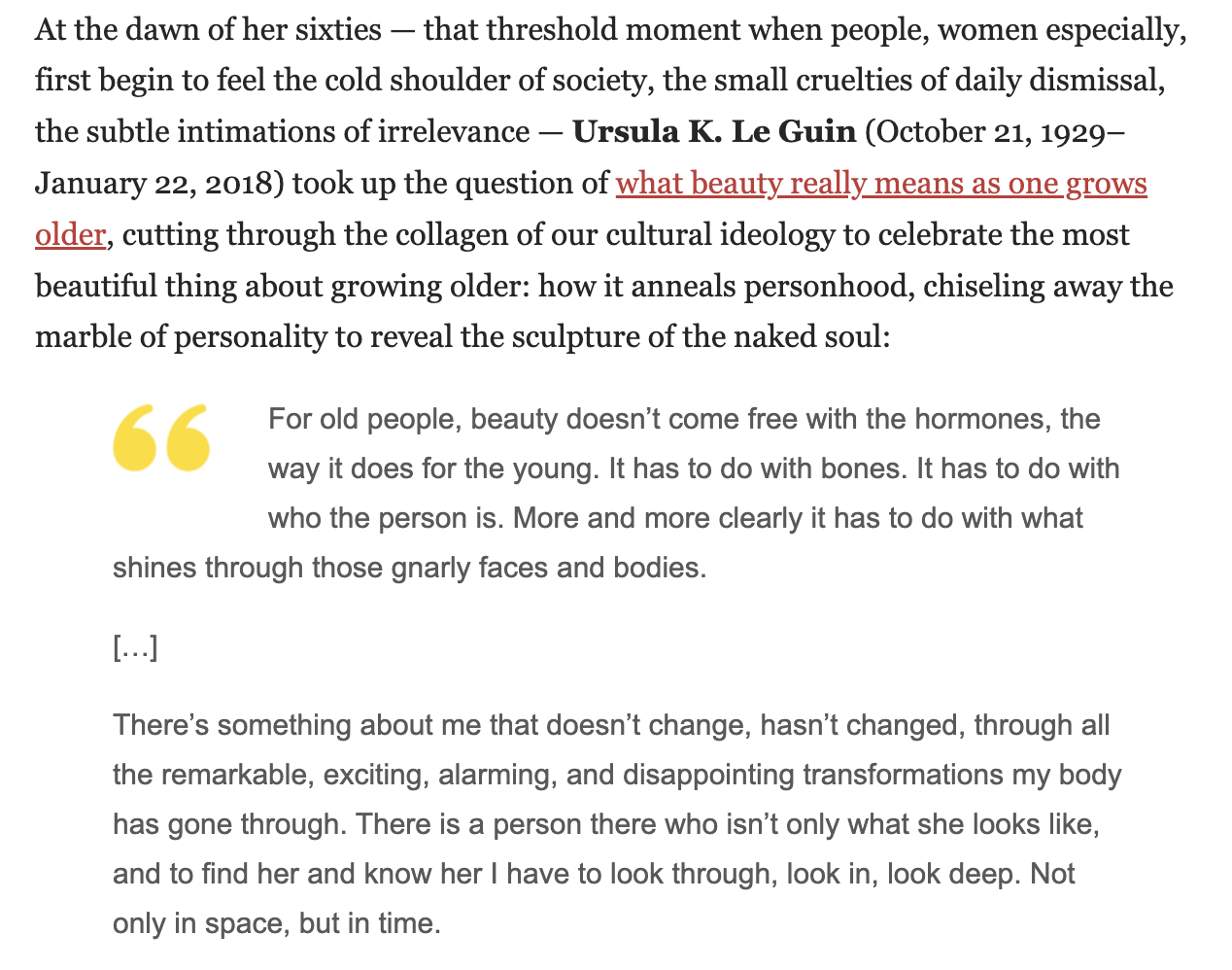
Nick Cave, Australian Singer Songwriter & Musician
Joan Didion, American Writer & Journalist
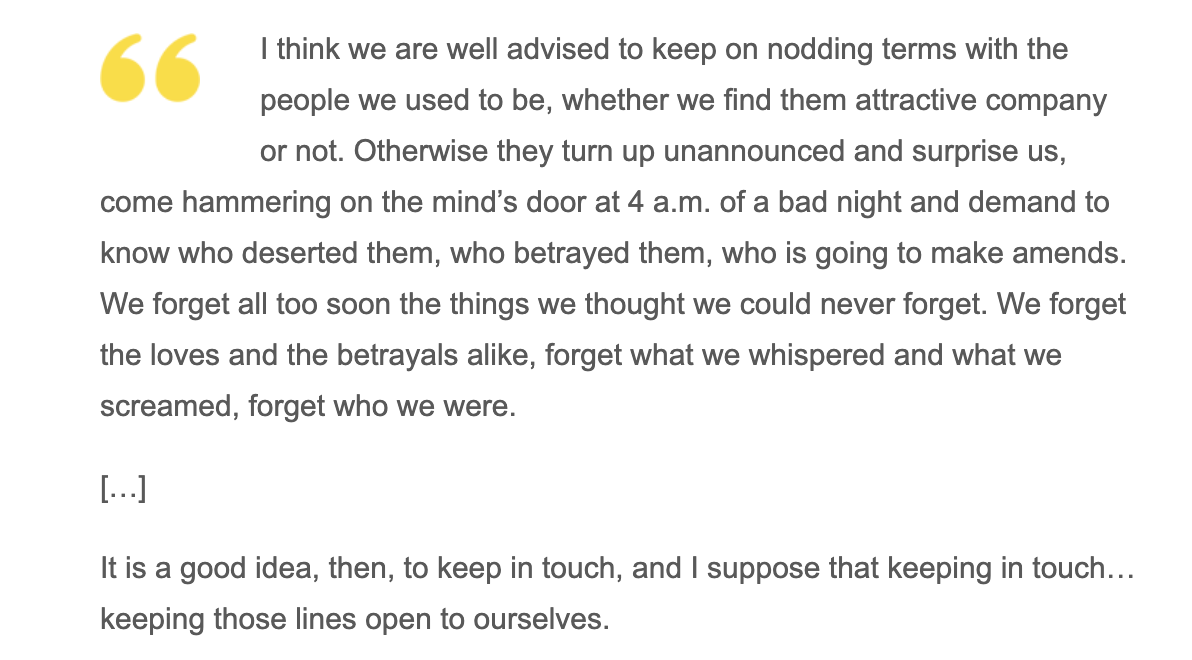
Henry Miller, American Novelist & Short Story Writer
Kahlil Gibran, Lebanese-American Writer & Poet
Simone de Beauvoir, French Philosopher & Writer
Grace Paley, America Author
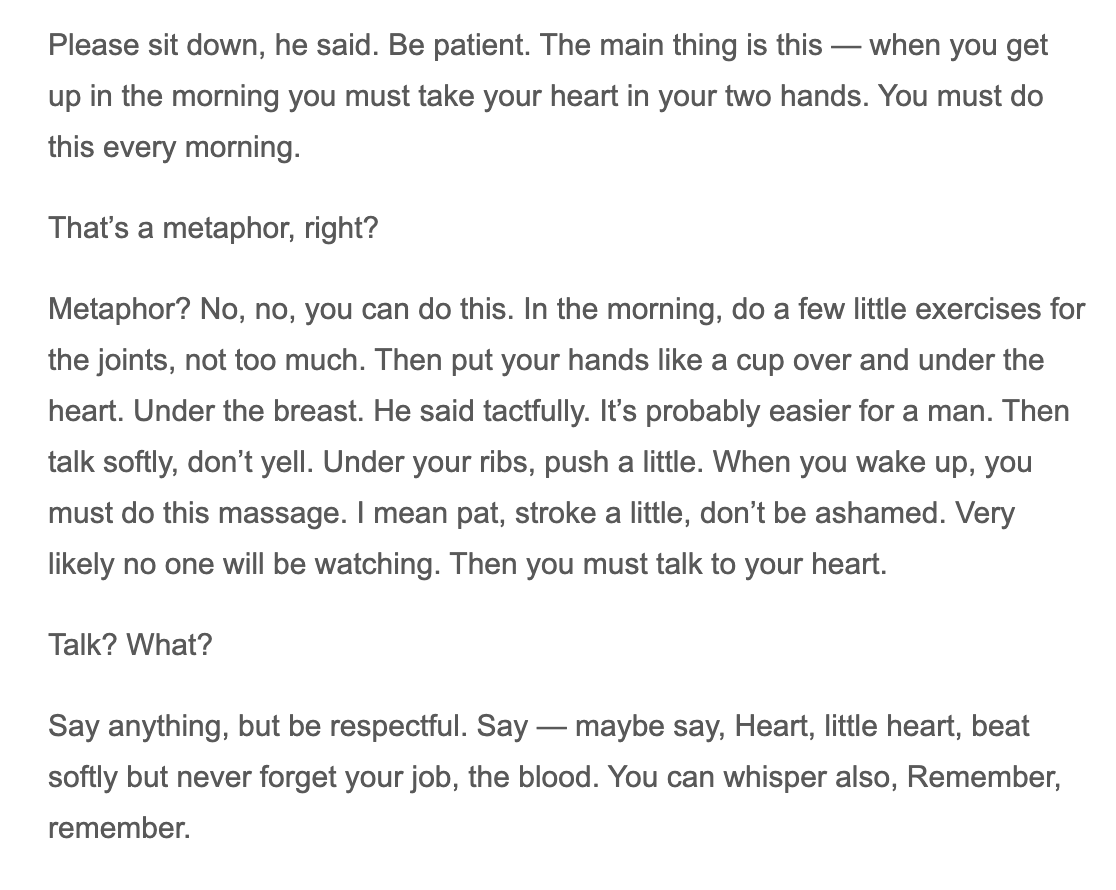
Maria Popova- Changed By Love
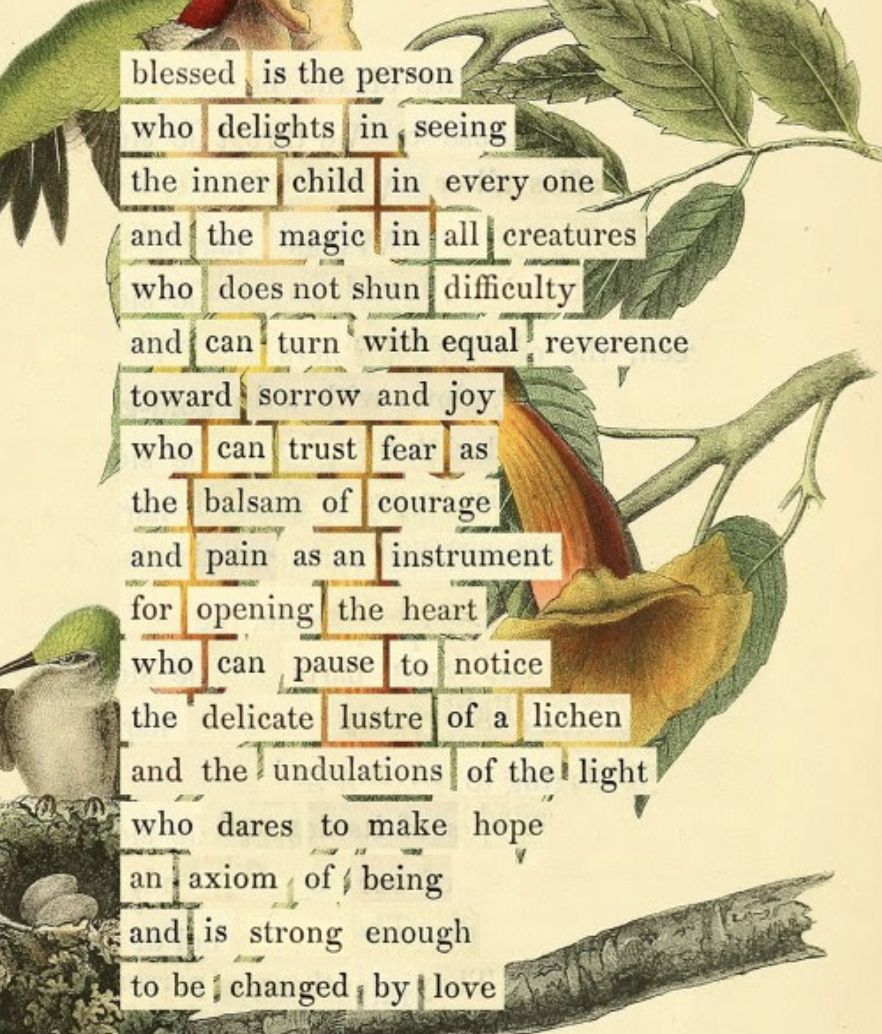
Humberto Maturana ,Francisco Varela
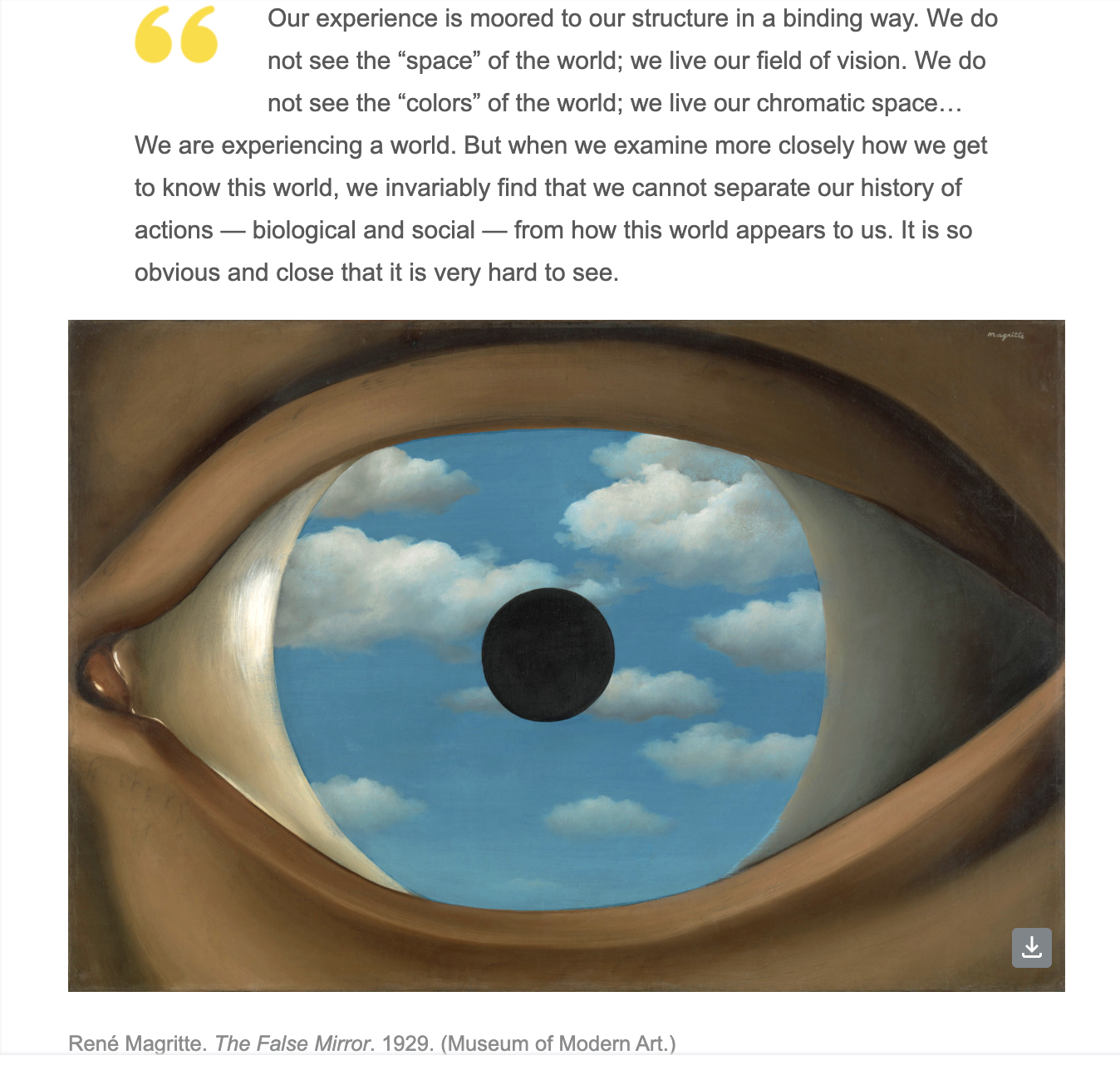
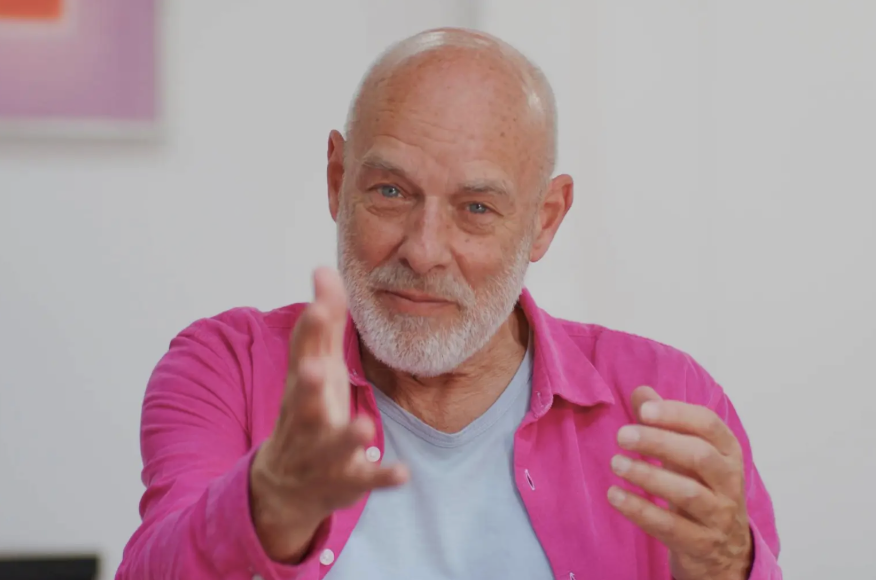
Brian Eno, English Musician & Songwriter
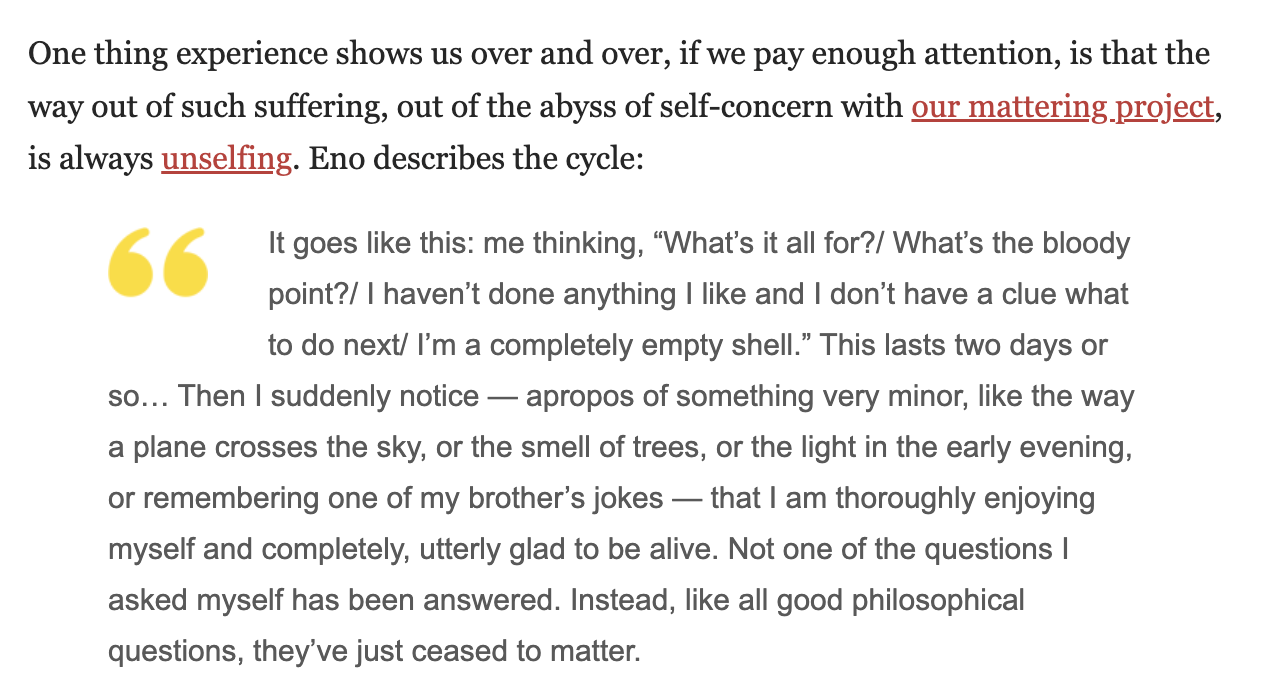
From The Marginalian, Photo Source, Anon
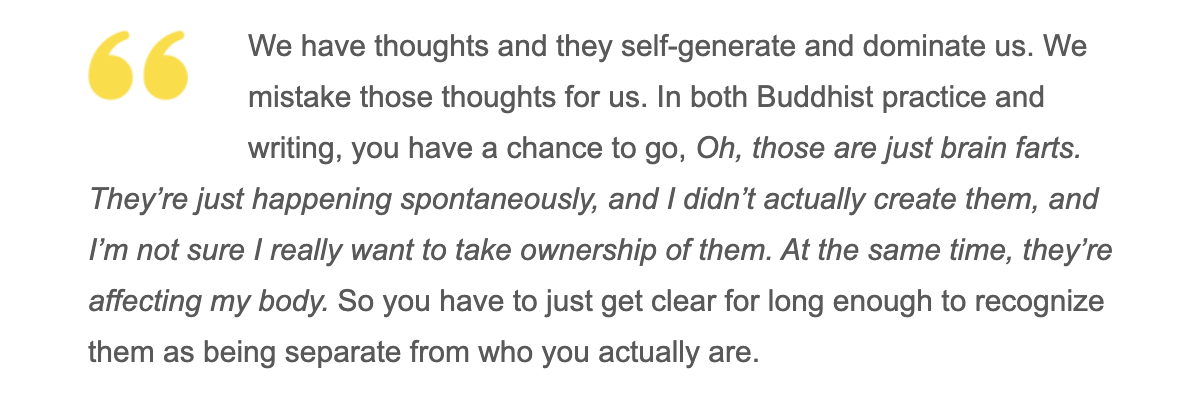
George Saunders on Thoughts

A Series of Perspectives on Aging
Source: Maria Popova, The Marginalian
photo source: Anon
Ursula K Leguin, American Author
Nick Cave, Australian Singer Songwriter & Musician
Joan Didion, American Writer & Journalist
Henry Miller, American Novelist & Short Story Writer
Kahlil Gibran, Lebanese-American Writer & Poet
Simone de Beauvoir, French Philosopher & Writer
Grace Paley, America Author
EB White's Reply to a Distressed Man --- A Lesson For These Troubled Times
In 1973, more than two decades after a young woman wrote to Albert Einstein with a similar concern, one man sent a distressed letter to E.B. White (July 11, 1899–October 1, 1985), lamenting that he had lost faith in humanity. The beloved author, who was not only a masterful letter-writer but also a professional celebrator of the human condition and an unflinching proponent of the writer’s duty to uplift people, took it upon himself to boost the man’s sunken heart with a short but infinitely beautiful reply, found in Letters of Note: Correspondence Deserving of a Wider Audience (public library) — the wonderful collection based on Shaun Usher’s labor-of-love website, which also gave us young Hunter S. Thompson on how to live a meaningful life.
Dear Mr. Nadeau:
As long as there is one upright man, as long as there is one compassionate woman, the contagion may spread and the scene is not desolate. Hope is the thing that is left to us, in a bad time. I shall get up Sunday morning and wind the clock, as a contribution to order and steadfastness.
Sailors have an expression about the weather: they say, the weather is a great bluffer. I guess the same is true of our human society — things can look dark, then a break shows in the clouds, and all is changed, sometimes rather suddenly. It is quite obvious that the human race has made a queer mess of life on this planet. But as a people we probably harbor seeds of goodness that have lain for a long time waiting to sprout when the conditions are right. Man’s curiosity, his relentlessness, his inventiveness, his ingenuity have led him into deep trouble. We can only hope that these same traits will enable him to claw his way out.
Hang on to your hat. Hang on to your hope. And wind the clock, for tomorrow is another day.
Sincerely,
E. B. White
From the Marginalian, Maria Popova
Maria Popova- The Marginalian

The Maples by Marie Howe
Consolations From the Kiln

Pottery source: Anon Photo Source: The Marginalian
Art from The Marginalian

Art by Julie Paschkis
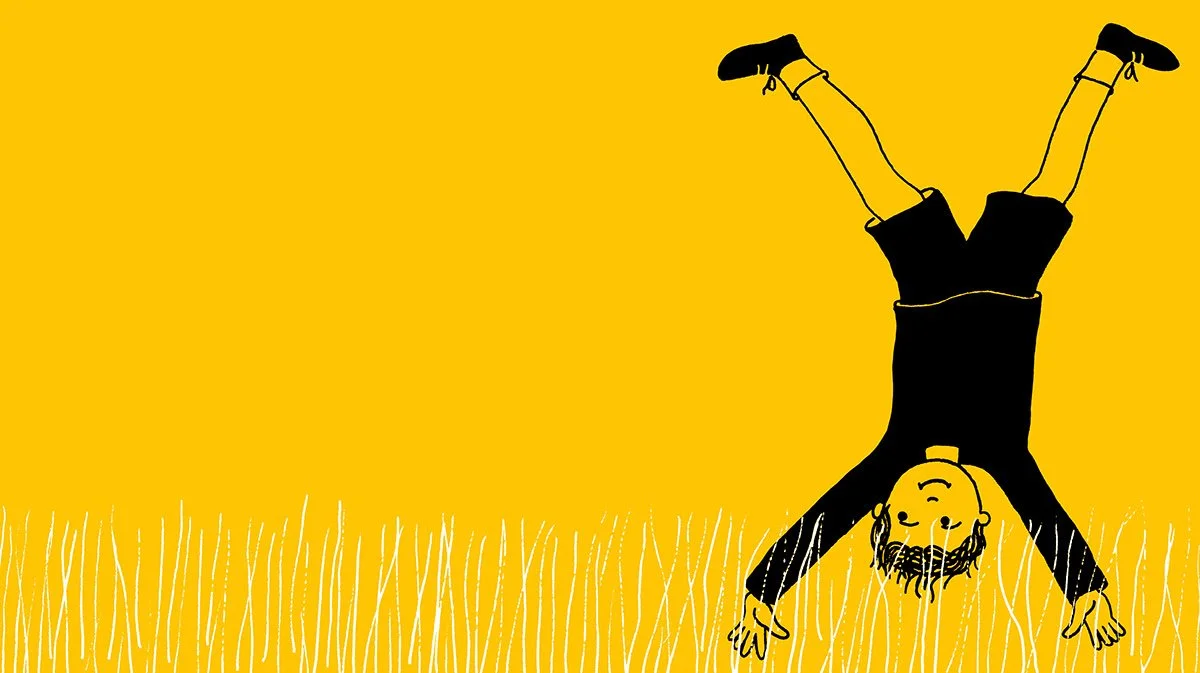
Art by Remi Charlip

Art by Giuliano Cucco
Maria Popova-- The Nature of the Mind

Maria Popova

The Souls of Animals, by Gary Kowalski

Source: The Marginalian
“They do not sweat and whine about their condition,” Walt Whitman wrote of the other animals, “they do not lie awake in the dark and weep for their sins, they do not make me sick discussing their duty to God, not one is dissatisfied, not one is demented with the mania of owning things.” Maria Popova
Gary Kowalski from his book The Souls of Animals:
”For ancient peoples, the soul was located in the breath or the blood. For me, soul resides at the point where our lives intersect with the timeless, in our love of goodness, our passion for beauty, our quest for meaning and truth. In asking whether animals have souls, we are inquiring whether they share in the qualities that make life more than a mere struggle for survival, endowing existence with dignity and élan.
Many people think of soul as the element of personality that survives bodily death, but for me it refers to something much more down-to-earth. Soul is the marrow of our existence as sentient, sensitive beings. It’s soul that’s revealed in great works of art, and soul that’s lifted up in awe when we stand in silence under a night sky burning with billions of stars. When we speak of a soulful piece of music, we mean one that comes out of infinite depths of feeling. When we speak of the soul of a nation, we mean its capacity for valor and visionary change… Soul is present wherever our lives intersect the dimension of the holy: in moments of intimacy, in flights of fancy, and in rituals that hallow the evanescent events of our lives with enduring significance. Soul is what makes each of our lives a microcosm — not merely a meaningless fragment of the universe, but at some level a reflection of the whole.
Without anthropomorphizing our nonhuman relations we can acknowledge that animals share many human characteristics. They have individual likes and dislikes, moods and mannerisms, and possess their own integrity, which suffers when not respected. They play and are curious about their world. They develop friendships and sometimes risk their own lives to help others. They have “animal faith,” a spontaneity and directness that can be most refreshing… all the traits indicative of soul. For soul is not something we can see or measure. We can observe only its outward manifestations: in tears and laughter, in courage and heroism, in generosity and forgiveness. Soul is what’s behind-the-scenes in the tough and tender moments when we are most intensely and grippingly alive.
How To Die by Edward Abbey

HOW TO DIE — but first, how not to:
Not in a smelly old bloody-gutted bed in a rest-home room drowning in the damp wash from related souls groping around you in an ocean heavy with morbid fascination with agony, sin and guilt, expiated, with clinical faces and automatic tear glands functioning perfunctorily and a fat priest on the naked heart.
Not in snowy whiteness under arc lights and klieg lights and direct television hookup. No never under clinical smells and sterilized medical eyes cool with detail calculated needle-prolonged agonizing, stiff and starchy in the white monastic cell, no.
Not in the muddymire of battle blood commingled with charnel-flesh and others’ blood, guts, bones, mud and excrement in the damp smell of blasted and wrung-out air; nor in the mass-packed weight of the cities atomized while masonry topples and chandeliers crash clashing buried with a million others, no.
Not the legal murder either — too grim and ugly such a martyrdom — down long aisled with chattering Christers chins on shoulders under bright lights again a spectacle an entertainment grim sticky-quiet officialdom and heavy-booted policemen guiding the turning of a pubic hair gently grinding in a knucklebone an arm hard and obscene fatassed policemen everywhere under the judicial — not to be murdered so, no never.
But how to:
Alone, elegantly, a wolf on a rock, old pale and dry, dry bones rattling in the leather bag, eyes alight, high, dry, cool, far off, dim distance alone, free as a dying wolf on a pale dry rock gurgling quietly alone between the agony-spasms of beauty and delight; when the first flash of hatred comes to crawl, ease off casually forward into space the old useless body, falling, turning, glimpsing for one more time the blue evening sky and the far distant lonesome rocks below — before the crash, before…
With none to say no, none.
Way off yonder in the evening blue, in the gloaming.
Robert Ranulph Marett-- Dormancy & Growth


Wonder--Is Always An Edge State

Art Source- Idyl Wyld

Maria Popova